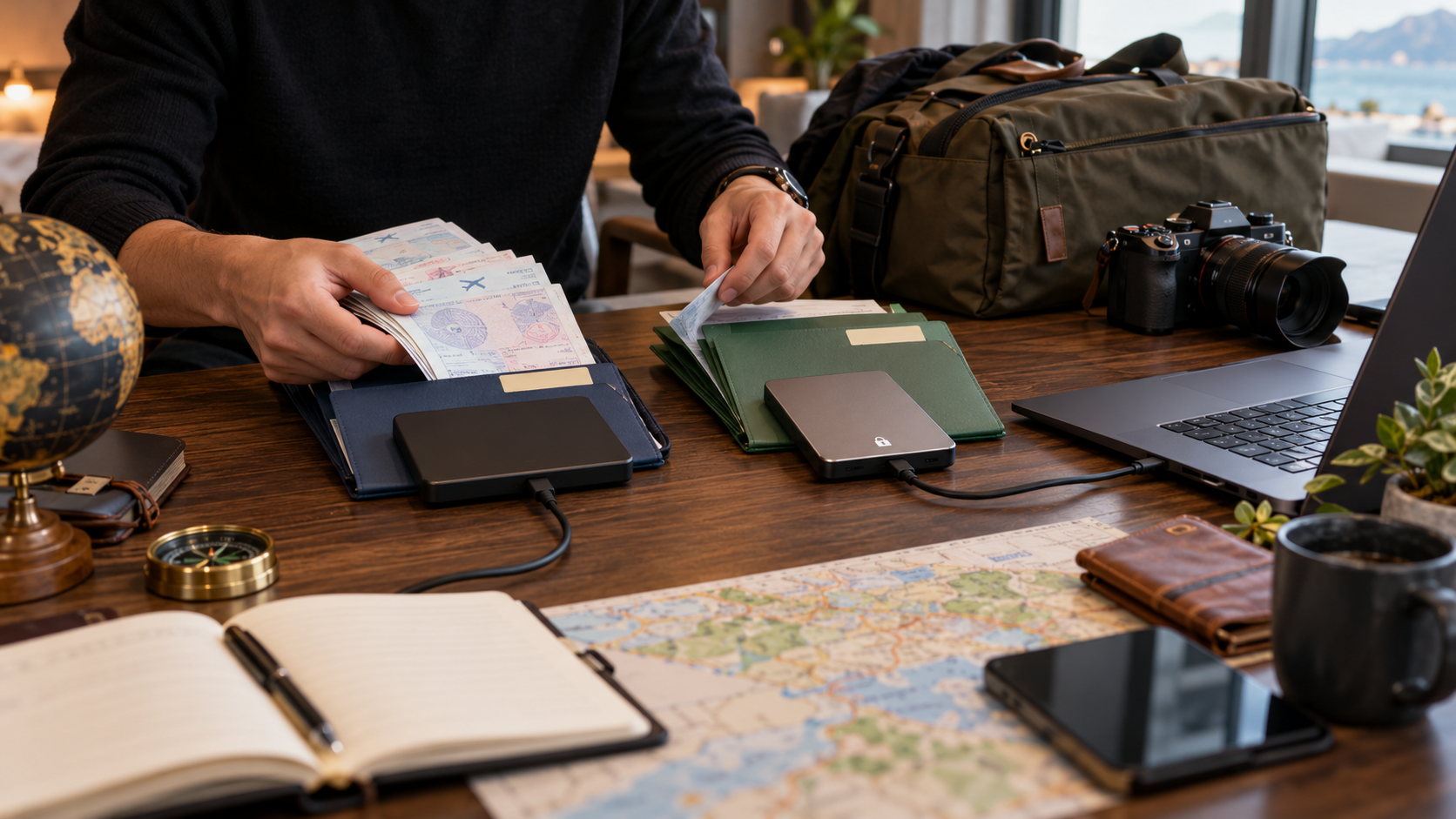
Separate trip access from the retained archive
A travel recovery set should be available under stress without leaving passport scans exposed on every device. Keep a controlled working package for the current trip and a separately protected retained copy. Test how each is unlocked, which account or key it needs and what remains as plaintext after viewing or export.
Build a testable recovery path
- 01Build the trip package from verified current documents in a temporary controlled folder.
- 02Encrypt the retained set and record its software and credential dependencies.
- 03Open every item once, then relock the archive and inspect temporary export locations.
- 04Store a separate recovery copy away from the primary travel device.
- 05Test access from the exact device and network conditions expected during travel.
Log the decision without copying identity data
Document package version, source verification, encryption tool and version, protected location, plaintext staging locations, recovery copy, access owner, test date and known limitations.
Stop and investigate when
- The only backup travels in the same bag as the passport.
- Opening the archive creates unprotected files that remain in Downloads.
- Password recovery is assumed to decrypt an old encrypted container.
A scan is not a replacement passport
Does not replace provider permissions, guaranteed backup, password recovery or enterprise identity management. A protected copy may support a process, but the issuing authority, destination and carrier decide what is accepted.
Emergency backup questions
Should the complete archive be on my phone?
Not automatically. Balance emergency access against loss risk and keep only the minimum trip-specific set.
Does device encryption replace file protection?
They address different loss and access scenarios; assess both and test the real workflow.
Use current official guidance
Nationality, destination, carrier and current issuing-authority rules control. Links support the stated decision and do not imply endorsement.